How we research and rate places
Real history, traceable accounts, and ratings that say exactly what they mean.
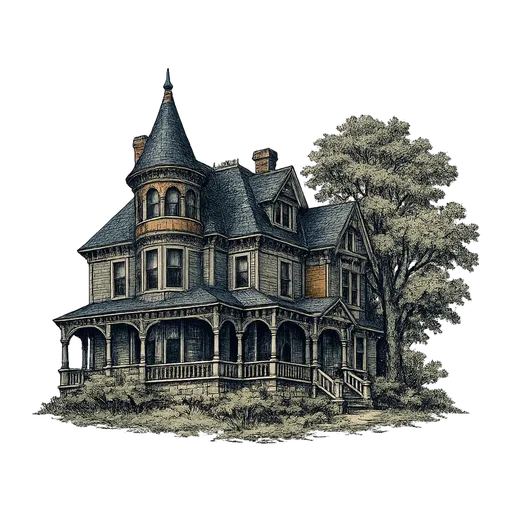
We document the history of each place and the experiences people say they had there. We don’t claim that any place is haunted, and nothing on this site is proof of ghosts. Our job is to show what is known, who said what, and where it came from.
How we research a place
Find the stories
We start from the stories told about a place: in books, newspapers, websites and on tours.
Trace each report
We follow every account back to where it was first published, and group the retellings.
Check the history
We test the story against registers, archives and newspapers from the time.
Rate the reports
A named reviewer rates how traceable the accounts are, with a written reason and a date.


What our ratings mean
We rate the reports, never the ghosts. A rating tells you how many independent, traceable accounts of unexplained experiences we found.
- Well Documented
At least three independent, traceable accounts from visitors or witnesses that describe consistent experiences, often the same things in the same places.
- Documented Accounts
At least one traceable published or first-hand account of an unexplained experience. We check that the reports exist, not the supernatural.
- Unverified
A haunted reputation or legend, but no traceable account of an experience so far.
An account counts when we can see who had the experience and where they first described it. Witnesses collected and first published by a named author count too, once, as one origin, even when the author doesn’t name them. Staff passing on what visitors say they experienced don’t count; a named or clearly identified staff member describing their own experience does. “Independent” means traced back to a different original source: retellings of one account count once (see below). The thresholds are a guide, not a formula. The reviewer weighs how traceable and consistent the accounts are, and whether they come from people who sell tours of the place.
Every rating comes with a written reason, the reviewer’s name and the date. When a rating changes, we record a new one and keep the old.
One story, told ten times, is one account
Ghost stories travel: a newspaper article from 1987 is retold by books, websites and tours for decades. We trace each report to where it first appeared and group the retellings together, so the same story never counts twice.
Documented history, however dramatic, doesn’t raise a rating. A real fire or a real death tells us what happened, not what people later experienced.
How we label each claim
Every statement on a place page carries one of these labels, and links to its sources.
- Documented history
- A verifiable fact, backed by a suitable source.
- Published account
- A named person or publication reported it. That shows it was reported, not what caused it.
- First-hand account
- Sent to us by the person it happened to, with their permission.
- Legend
- A traditional story with uncertain origins.
- Disputed
- Sources disagree; both sides are shown.
- No traceable witness
- Not enough documentation found yet.
Where our information comes from
We prefer original records: the National Register of Historic Places and state historic preservation offices, the Library of Congress and its Chronicling America newspaper archive, local libraries, museums and historical societies, contemporary newspapers, official site histories, and accounts from named people. Other ghost websites are leads at most: we look for the original source.
We write in our own words and quote sparingly. Each source shows when we last opened it, and an archived copy where we have one.
Every source we use is listed once on our sources page, with the places that use it.
Care and responsibility
- Former asylums and hospitals were homes and workplaces. We describe their history with care, and people who were patients there are never the stuff of horror stories.
- We don’t accuse living people, invent tragedies or present a legend as history.
- Private homes, active schools and fragile sites are shown only by their town, or not mapped at all. Please don’t trespass.
- We don’t list opening hours or prices, which change: we link to the official site and say when we last checked access.
Corrections
If we’ve got something wrong, or you know a source we should read, please tell us. Every correction is read by a person.
Explore with confidence
Every place in the atlas is built on the same rules: its history sourced, its stories traced, its rating explained.